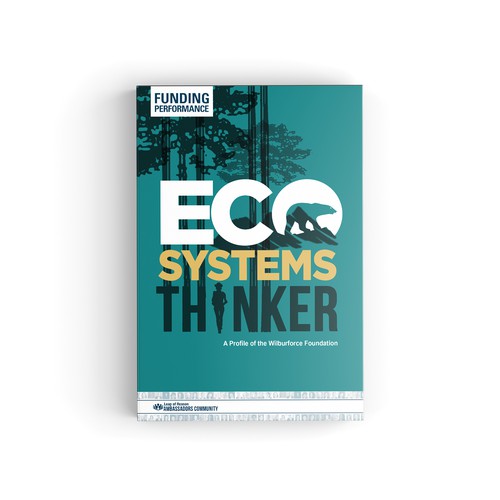
(Figure 1)
This is a good example of conceptual design on a nature magazine cover which I have selected. Within this cover, I think there is some very interesting uses of conceptual design which have been displayed very well. Firstly, in the word ‘Eco’, the ‘O’ has become a bear walking over some mountains, with the huge moon in the distance behind the bear. Secondly, from the word ‘Thinker’, the letter ‘I’ is replaced by a person standing there, I presume a woman. Lastly, in the world ‘Thinker’, the ‘H’ and the ‘K’ turn into tree trunks by the elongated branches connecting to the top of the letters. This almost takes our eyes on a journey across the whole cover. Additionally, there is some extra illustrations in the background which also help to tie in this conceptual design. These include leaves, branches, and mountains. Moreover, I believe these use of conceptual design grabs the viewers attention and perhaps encourages the viewer to read the magazine, as we can see more what it’s about. I believe this has successfully transformed a concept or idea into visual media. The conceptual design has become the main focus of the design, due to the rest of the cover being fairly simple, allowing the conceptual design to add most of the detail. I believe it adds a complex idea to what would’ve been a fairly simple magazine cover. This highlights the amount of detail conceptual design can add and how it intrigues us, making us stare at it for longer to focus on how all these uses of conceptual design tie in to create, and convey a clear message. It also helps us to understand further what the contents of the magazine is going to contain as we can visualise it, we can tell it’s going to be about plants, animals, and their environment.
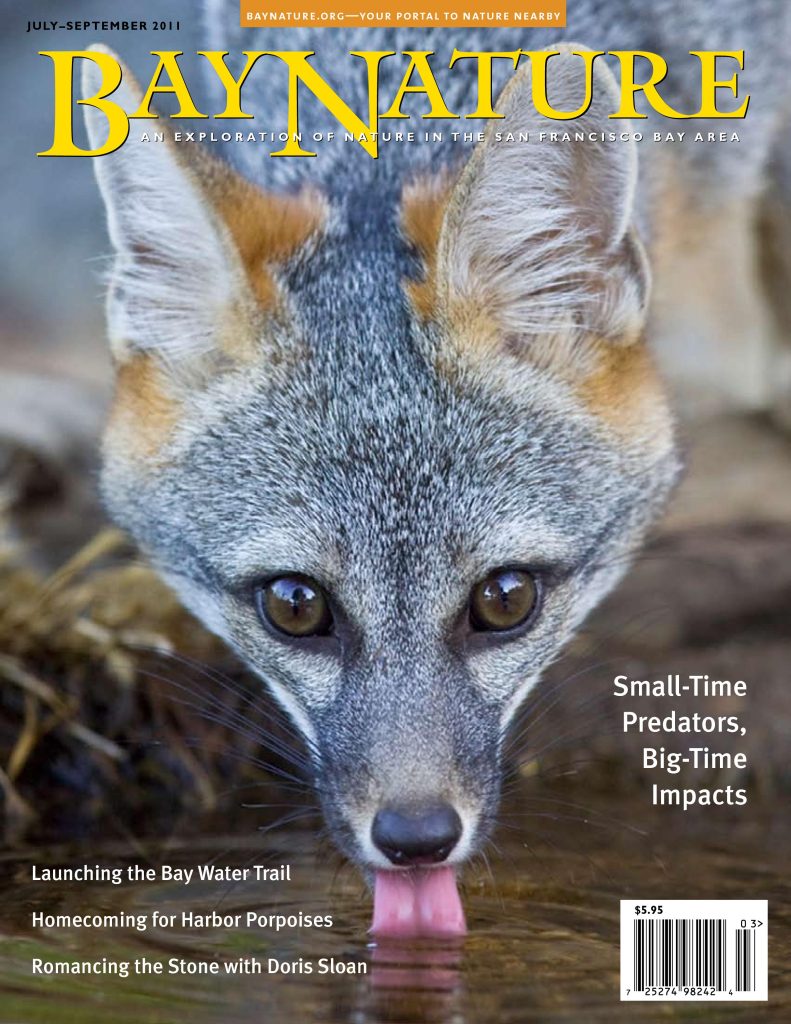
(Figure 2)
This is a bad example of a nature magazine cover which I have selected as it doesn’t contain any conceptual design, when I think it could’ve really complimented this cover. A singular image has been used for the whole cover, which is an interesting and captivating image, but it is very simple and I feel as though they could’ve done quite a lot with conceptual design in this, as nature has lots of different elements to it that could’ve been utilised. The use of this singular image just isn’t as aesthetically pleasing for us as conceptual design can be. I think it would’ve been particularly interesting if they added something to do with the ‘small-time predators, big-time impacts’ part, for example including different animals within the title. This would’ve helped to highlight what the contents of the magazine includes, sometimes visually seeing something helps us to take in information more. This is really interesting as it isn’t universally understood how much predators have profound effects throughout their ecosystems, even the smallest predators (Figure 3). Ultimately, I believe they could’ve done a lot more with this magazine cover to convey what its contents is about.
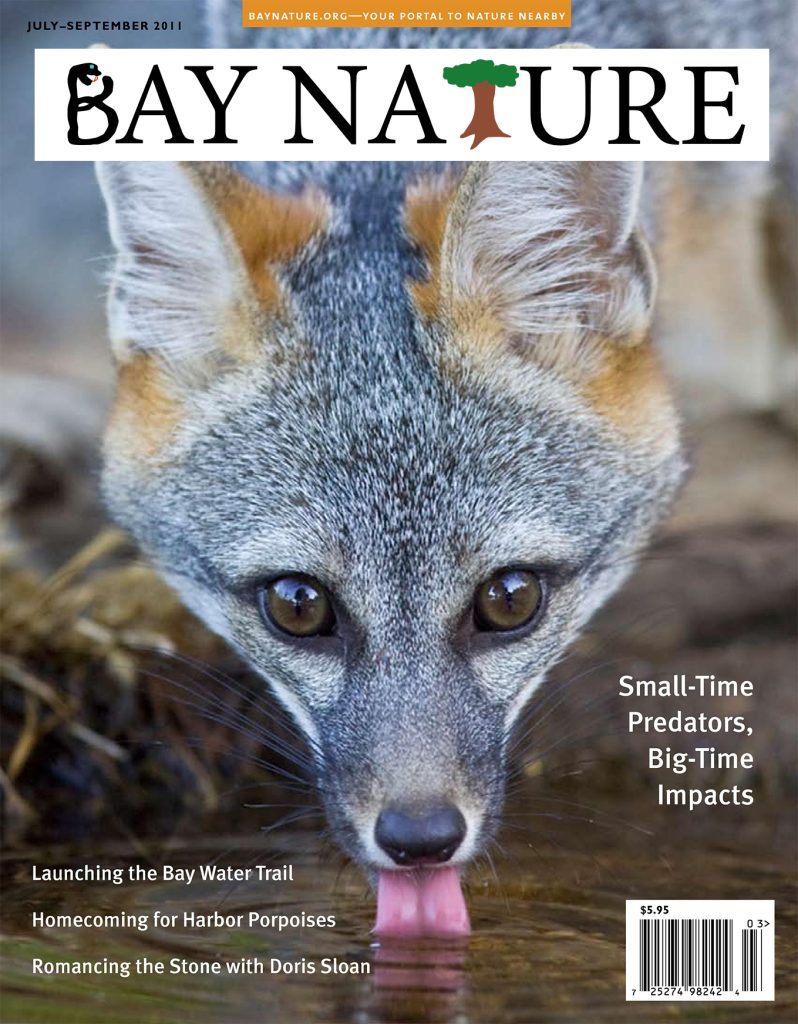
This is my redesigned demonstration of a refined example of the magazine cover without any conceptual design, which I have now added. I believe my refinement will stimulate audience engagement much more. To show some examples of how I would add conceptual design, I focused on the title. I knew I wanted to include an animal and an aspect of nature, to enhance the ‘small-time predators, big-time impacts’ part. Initially, I decided to include a snake and work around the letter ‘B’ of ‘Bay Nature’, making the snake bend around the letter, as snakes often bend in lots of different directions. Secondly, I decided to include a tree, and I thought most tress can be shaped looking like a ‘T’, so I worked around this letter in the word ‘Nature’ to create a tree that would fit in this word. I believe these two uses of conceptual design add much more depth to the cover and looks much more detailed, whilst informing us more on what the contexts of the magazine will contain.
Reference List:
Figure 3: Berger, J., Stacey, P.B., Bellis, L. and Johnson, M.P. (2011) The Ecological Importance of Predators. https://www.nrdc.org/sites/default/files/predatorimportance.pdf [Accessed 30 October 2024].
Figure 2: Finocchio, B. (2020) Bay Nature Cover – Dream Catcher Images by Bruce Finocchio. https://dreamcatcherimages.net/bay-nature-cover/ [Accessed 2 October 2024].
Figure 1: Leap Ambassadors. (2021) Ecosystems Thinker – Leap Ambassadors. https://www.leapambassadors.org/for-funders/funding-performance/rose-letwin/ [Accessed 2 October 2024].