Research and analysing Classic Football Shirts:
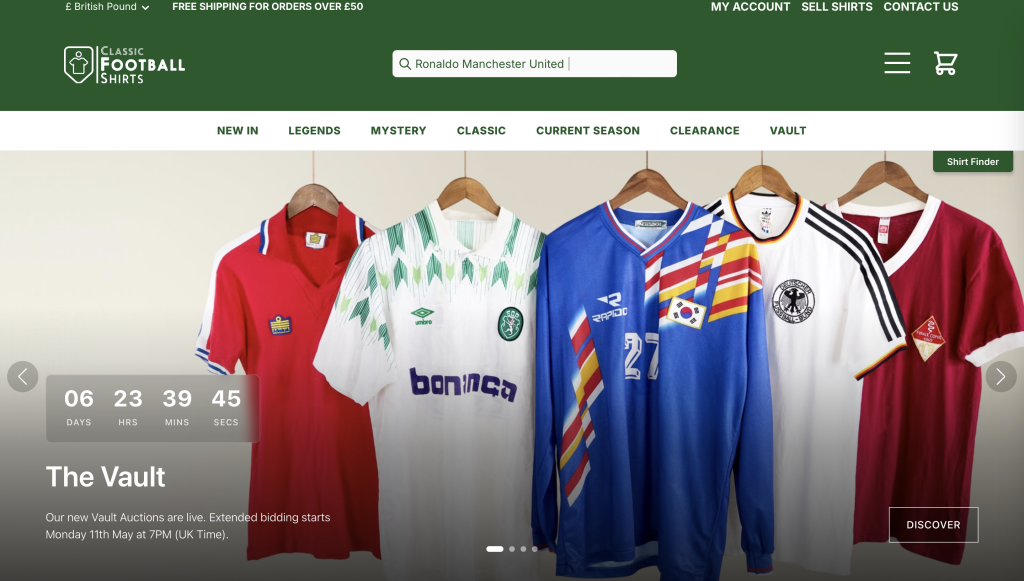
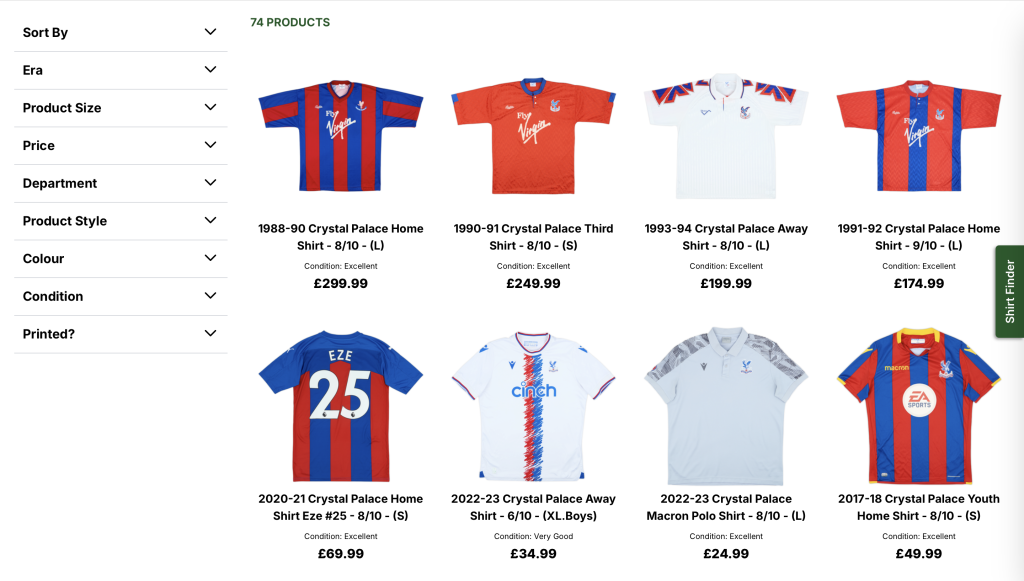
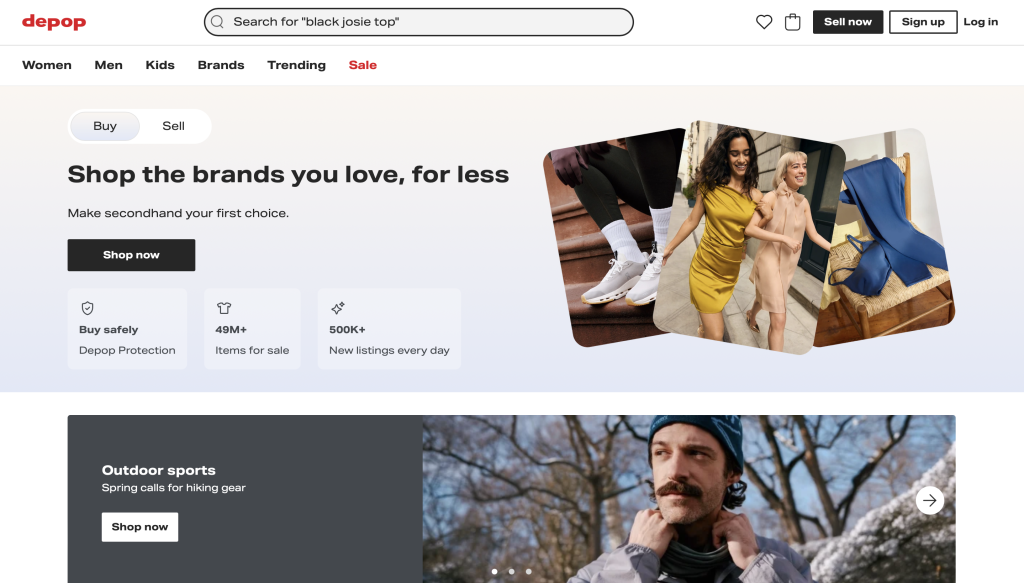
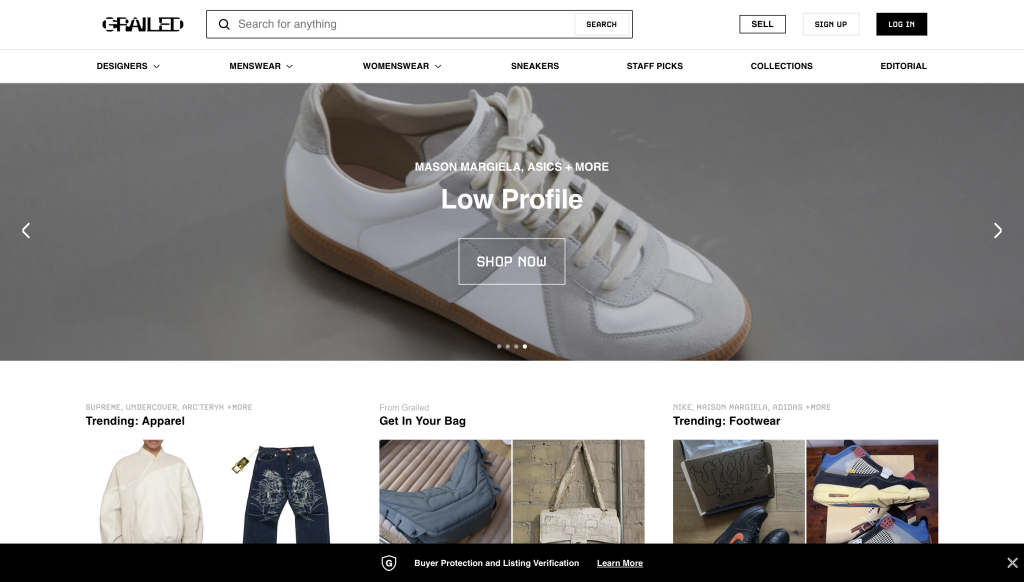
Classic Football Shirts works as a nostalgic retail brand, specialising in vintage and rare football shirts from a wide range of clubs, leagues and eras. Therefore, this is more than a regular football shirt website. (Figure 3). Ultimately, the brand’s core value lies in authenticity, with a strong emphasis on originality, nostalgia and the historical significance of football culture. This is evident in both its product range, from rare vintage pieces to recent kits, and its presentation, which frames items through era, club, and cultural significance. From a visual communication perspective, the website has a functional design system that prioritises product visibility. The homepage introduces categories such as ‘The Vault’. This approach is continued in the product listing page shown, where shirts are displayed in a consistent grid format against a neutral background. Each item includes detailed information such as the season, club, condition, and price. This reflects an art direction strategy focusing on the system and credibility, rather than expressive branding. However, I will note some areas of this site seem overcrowded and overwhelming, often leaving the users with too much choice, perhaps leaving them unsure how to navigate their way through the site. In addition, the typography is mainly sans-serif, which is very clear, supporting readability and usability, whilst the overall colour palette remains minimal, yet not dull. This restraint allows the shirts, often visually vibrant and memorable, to stand out further, which allows visual hierarchy to be controlled majorly by the product rather than the layout. This demonstrates a deliberate art direction decision. Moreover, the target audience is noticeably football fans, which is reflected in the filtering system such as era, size, and condition, which indicates a user who values specific details and knowledge, therefore this aspect benefits the user. This shows attention to detail across the brand and website. In addition, pricing variation, for example from affordable recent shirts to more expensive vintage pieces, helps support a range of customers. Overall, the rise of retro football shirts aligns with wider fashion trends and resale culture. Brands such as Depop and Grailed similarly emphasise individuality, but I believe Classic Football Shirts differentiates itself through unique football heritage. (Figure 1 & 2). On the other hand, I believe a key opportunity for growth in Classic Football Shirts could be involving more narratives. Although narrative content is present, it remains secondary. Art direction could evolve to incorporate more successful narratives, such as contextual imagery, to strengthen the historic value. By shifting from a functional design to a more immersive experience at times, users could connect more with the brand. The gap in this brand presents a clear opportunity for development in Task 3. My ideas will focus on building more of a narrative to create an emotionally engaging space for football lovers that has clear usability. Ultimately, Classic Football Shirts demonstrates a clear and consistent visual strategy based on authenticity and precision. However, its future perhaps lies in expanding its art direction to balance functionality with storytelling, creating a deeper and more engaging user experience.
Comparative brands mentioned:
Reference List:
Figure 1: Depop. (2024) Depop – buy, sell, discover unique fashion. https://www.depop.com/gb/ [Accessed 21 March 2026].
Figure 2: Grailed (n.d.). Grailed: Largest Online Marketplace to Buy & Sell Menswear. https://www.grailed.com [Accessed 21 March 2026].
Figure 3: Shirts, C.F. (2024) Classic Football Shirts https://www.classicfootballshirts.co.uk [Accessed 21 March 2026].